I never thought I’d become someone who tracks their sleep stages, experiments with cold showers at 5 a.m., or tests how different foods affect my blood glucose in real-time. But here I am, several years into experimenting with my biology, and honestly, the changes have been so profound that I can’t imagine going back to my old approach to health and wellness.
When I first heard the term “biohacking,” I’ll admit I was pretty skeptical. It sounded like something only Silicon Valley tech bros with too much money and time would care about.
I imagined people sitting in infrared saunas, wearing heart rate monitors, and drinking bizarre mushroom concoctions.
And yeah, some of that does happen in the biohacking world. But what I uncovered as I started experimenting with simple changes was that biohacking is really just understanding how your body works and making intentional adjustments to improve how you feel, think, and perform every single day.
My entry point was actually pretty mundane. I was constantly exhausted despite sleeping what I thought was enough, my focus at work was terrible, and I just felt like I was operating at maybe 60% of my potential.
A friend mentioned he’d started tracking his sleep and making some adjustments based on the data, and he seemed like a different person.
That conversation sparked my curiosity, and I went down the rabbit hole from there.
Understanding What Biohacking Actually Means
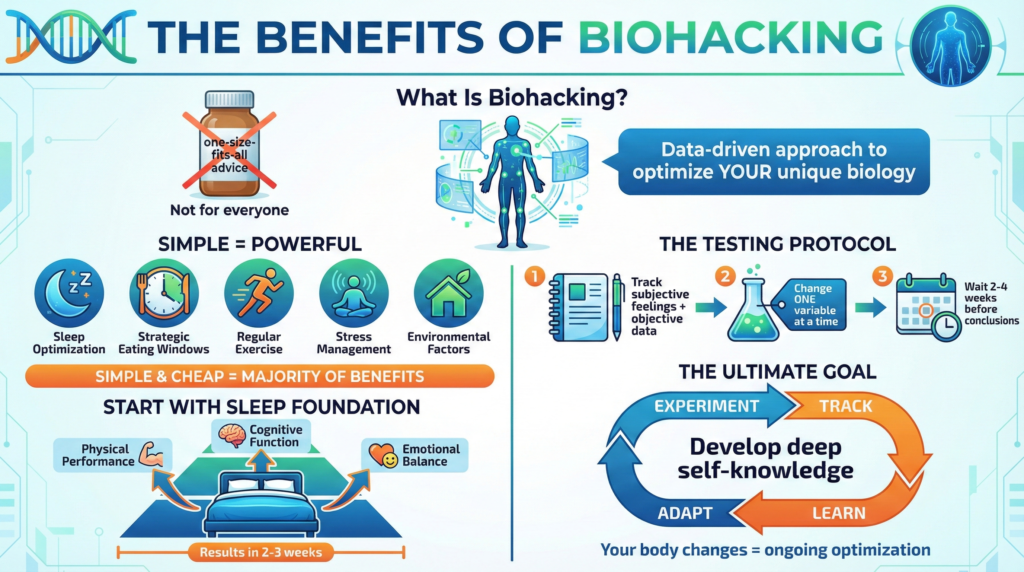
The term “biohacking” gets thrown around a lot these days, and it means different things to different people. Biohacking is the practice of making intentional changes to your biology, lifestyle, and environment to improve your physical and mental performance.
You take control of your own biology instead of just accepting whatever state your body happens to be in.
What makes biohacking different from traditional wellness advice is the emphasis on personalization and measurement. Instead of following generic recommendations that might work for some average person who doesn’t actually exist, you gather data about your own body and experiment to find what works specifically for you.
Your optimal sleep schedule might be completely different from mine.
The diet that makes you feel energized might make someone else sluggish. Biohacking looks at these personal differences and gives you the tools to figure out your personal optimization strategy.
The practice ranges from really basic interventions like adjusting your sleep environment or changing when you eat, all the way to more advanced techniques like using wearable devices to track biomarkers, trying various supplements, or exposing yourself to controlled stressors to build resilience. The beauty of biohacking is that you can start wherever you’re comfortable and gradually experiment with more sophisticated approaches as you learn what your body responds to.
The Physical Performance Benefits That Actually Matter
One of the first areas where I noticed dramatic improvements was in my physical energy and performance. Before I started paying attention to my biology, I would have these massive energy crashes in the afternoon, and my workouts felt inconsistent.
Some days I’d feel strong, other days I could barely get through my routine, and I had no idea why.
The first major benefit came from optimizing my circadian rhythm. I started using blackout curtains, avoiding blue light from screens a couple hours before bed, and going to sleep and waking up at consistent times even on weekends.
Within about two weeks, the difference was remarkable.
I was falling asleep faster, sleeping more deeply, and waking up actually feeling refreshed instead of hitting snooze five times. The data from my sleep tracker confirmed what I was feeling.
My deep sleep increased by about 30%, and my overall sleep efficiency improved significantly.
Better sleep naturally led to better physical performance. My recovery between workouts improved, which meant I could train harder and more consistently.
I started tracking my heart rate variability, which is basically a measurement of how well your nervous system is recovering from stress.
When my HRV was high, I knew I could push hard in my workouts. When it was low, I’d do lighter sessions or focus on recovery.
This simple adjustment helped me avoid overtraining and actually see more consistent progress.
The metabolic benefits have been really interesting too. I experimented with different eating windows and food combinations while wearing a continuous glucose watch for a month.
I discovered that my blood sugar would spike dramatically after eating rice or bread, even whole-grain versions, but stayed remarkably stable when I ate those same carbs after a workout or later in the day.
I also found that eating protein and fat before carbs in a meal completely changed my glucose response. These weren’t insights I could have gotten from generic diet advice.
They were specific to my body’s metabolism.
Temperature exposure has been another game-changer for physical performance. I started taking cold showers and eventually worked up to ice baths a couple times per week.
Beyond the mental toughness aspect, cold exposure has improved my recovery dramatically, reduced inflammation, and increased my metabolic rate.
The research shows that regular cold exposure can increase brown fat, which burns calories to generate heat, and improve insulin sensitivity. I was skeptical about these claims until I experienced them myself.
After consistent cold exposure for about three months, I noticed I could tolerate cold temperatures much better, my energy levels were more stable throughout the day, and I was actually recovering faster between intense training sessions.
Cognitive Enhancement and Mental Clarity
The physical benefits were great, but honestly, the cognitive improvements have been even more impactful for my daily life and work. I spend most of my day thinking, writing, and making decisions, so anything that improves my mental performance has outsized returns.
The foundation of cognitive enhancement through biohacking starts with getting the basics right. Quality sleep, as I mentioned, was transformative.
However, beyond just getting enough sleep, I optimized the timing of my sleep to align with my natural chronotype.
I’m naturally more of a night owl, so forcing myself to wake up at 5 AM because some productivity guru said that’s what successful people do was actually counterproductive. Once I started structuring my schedule to match my biology instead of fighting it, my cognitive performance improved dramatically.
I could think more clearly, concentrate for longer periods, and solve complex problems more efficiently.
Nutrition plays a massive role in mental clarity, too. Through experimentation, I discovered that I think much more clearly when I delay breakfast and work in a fasted state during my peak cognitive hours in the morning.
The stable blood sugar and elevated ketones seem to provide steady mental energy without the crashes.
I know people who are the complete opposite and need to eat breakfast to think clearly. That’s the whole point of biohacking.
You figure out what works for your specific biology through systematic testing and observation.
I’ve also experimented with various nootropics and supplements to enhance cognitive function. Some made noticeable differences, others did nothing for me.
L-theanine combined with caffeine smooths out the jittery effects of coffee while maintaining alertness.
That combination has become a daily staple for me. Creatine, which most people think of as just a workout supplement, has research showing cognitive benefits, and I did notice improvements in mental stamina on demanding thinking tasks.
Omega-3 fatty acids made a subtle but real difference in mood stability and focus after about a month of consistent use.
The environmental factors matter tremendously for cognitive performance, too. I optimized my workspace lighting to mimic natural daylight, which reduced eye strain and improved alertness.
I experimented with different background sounds and uncovered that certain types of music actually do help me focus, while silence works better for other types of tasks.
I started taking strategic breaks using the Pomodoro Technique, but adjusted the intervals based on my attention span data instead of using the standard 25-minute blocks. For me, 52 minutes of focused work followed by a 17-minute break turned out to be optimal.
I uncovered this through weeks of experimentation and tracking my productivity during different work intervals.
Emotional Resilience and Stress Management
What surprised me most about biohacking was how much it improved my emotional state and ability to handle stress. I didn’t start this process thinking about mental health, but the practices I adopted ended up having profound effects on my mood, anxiety levels, and overall emotional resilience.
Understanding the connection between my physical state and emotional state was really eye-opening. When my sleep was poor, my stress levels were chronically elevated, which I could see in my heart rate variability data.
When my blood sugar was unstable from poor food choices, my mood would swing unpredictably throughout the day.
Once I started optimizing these physical factors, my emotional baseline improved dramatically without any direct focus on mental health practices.
Breathwork has been one of the best tools for managing acute stress. I learned various breathing techniques like box breathing, physiological sighs, and extended exhale breathing.
Now I have a toolkit I can deploy whenever I’m feeling anxious or overwhelmed. The beauty of breathwork is that it directly affects your nervous system in real time.
You can literally shift from a stressed state to a calm state in a couple of minutes just by changing your breathing pattern. The data backs this up.
My heart rate variability responds immediately to intentional breathing practices, showing me objectively that my nervous system is shifting into a more relaxed state.
Cold exposure, beyond the physical benefits, has been incredible for building stress resilience. There’s something about voluntarily putting yourself in an uncomfortable situation and learning to stay calm through it that translates to other stressful situations in life.
The physiological stress response I experience in cold water is similar to what I might feel before a big presentation or difficult conversation, but I’ve trained myself to stay composed through controlled breathing and mental techniques.
That skill transfers remarkably well to other situations. When I’m in a genuinely stressful situation at work or in my personal life, I can access that same calmness I’ve practiced in the cold.
I also started tracking my cortisol patterns through saliva testing and uncovered that mine was elevated at night when it should have been dropping, which explained why I’d often feel wired and tired simultaneously. Through a combination of stress management practices, exercise timing adjustments, and evening routines designed to down-regulate my nervous system, I was able to normalize my cortisol rhythm.
The subjective improvement in how I felt was matched by the goal data showing healthier hormone patterns.
My sleep quality improved even further, and that persistent feeling of being simultaneously exhausted and unable to relax finally went away.
Longevity and Disease Prevention
While the day-to-day benefits of biohacking are great, what really motivates me long-term is the potential for extending my health span. Health span is the number of years you live in good health, not just extending lifespan regardless of quality.
The research on interventions that can slow aging and prevent disease is fascinating, and many of these practices are accessible to regular people right now.
Intermittent fasting and time-restricted eating have some of the most compelling evidence for longevity benefits. By limiting my eating to an 8-10 hour window most days, I’m triggering autophagy, the cellular cleanup process where your body breaks down and recycles damaged components.
This process is associated with reduced inflammation, better metabolic health, and potentially slower aging.
The research in animals is really detailed on this, and while we’re still learning about effects in humans, my biomarkers have improved noticeably since adopting this practice. My fasting glucose dropped from 95 to 82, my triglycerides came down, and my inflammatory markers improved significantly.
Exercise is obviously important for longevity, but biohacking has helped me improve how I exercise. I learned that combining both high-intensity interval training and steady-state cardio provides different beneficial outcomes.
HIIT improves mitochondrial function and metabolic flexibility, while zone 2 cardio builds aerobic base and fat-burning capacity.
Strength training is crucial for maintaining muscle mass and bone density as we age. By tracking my workouts and recovery data, I can confirm I’m getting the right mix of training stimuli without overtraining.
I’m not just exercising randomly anymore.
Every workout has a specific purpose based on what my body needs at that moment.
Monitoring inflammatory markers through regular blood work has given me insight into how my lifestyle choices affect my long-term disease risk. Chronic inflammation is linked to basically every age-related disease, like heart disease, cancer, Alzheimer’s, and diabetes.
Through diet optimization, stress management, quality sleep, and targeted supplementation, I’ve been able to keep my inflammatory markers in the optimal range.
Seeing those goal improvements in my bloodwork motivates me to maintain these practices even when I’m tempted to slack off. When I see my C-reactive protein at 0.3 instead of 2.5, I know the work I’m doing is actually protecting my long-term health.
One of the more experimental areas I’ve explored is heat exposure through sauna use. The research on sauna bathing and longevity is actually pretty remarkable.
Regular sauna use is associated with reduced risk of cardiovascular disease, dementia, and all-cause mortality.
The proposed mechanisms include improved cardiovascular function, increased heat shock proteins that help maintain cellular health, and enhanced detoxification. I started using a sauna 3-4 times per week, and beyond feeling great afterward, I’m hopeful this practice is providing long-term protective benefits that I’ll see play out over decades.
Implementing Your Own Biohacking Protocol
If you’re interested in exploring biohacking yourself, I really encourage you to start simple instead of trying to overhaul everything at once. The approach that worked for me was to pick one area to focus on, experiment with it consistently for at least a month, and then add another intervention once I had the first one dialed in.
Starting with sleep optimization gives you the most bang for your buck. Make your bedroom completely dark, keep it cool around 65-68°F, establish a consistent sleep schedule, and avoid screens for an hour before bed. Track your sleep subjectively by noting how you feel each morning, and if you want goal data, a simple wearable device can show you trends in your sleep quality over time.
Once you’ve got your sleep dialed in, you’ll have more energy and mental clarity to tackle other optimizations.
From there, I’d suggest experimenting with nutrition timing and food choices. Try different eating windows to see how you feel working in a fasted versus fed state.
Use a food journal to track what you eat and how you feel 1-2 hours later.
If you want more precise data, you can try a continuous glucose watch for a month. Seeing how your body responds to different foods and activities in real time is really eye-opening.
The goal is to identify your personal patterns instead of following generic advice that may or may not apply to you.
Adding movement and exercise optimization comes next. If you’re not already exercising regularly, just establishing a consistent routine is the priority.
If you’re already active, consider tracking your workouts, recovery metrics, and performance to identify patterns.
Are you training too hard without enough recovery? Are you doing the same routine without adequate progressive overload?
The data helps you answer these questions and adjust accordingly.
As you get more comfortable with the basics, you can experiment with more advanced techniques. Try cold showers for a week and see how you feel.
Experiment with different supplements one at a time so you can actually tell if they’re making a difference.
Try breathwork practices and notice the immediate effects on your stress levels. Test out different morning and evening routines to improve your circadian rhythm and nervous system regulation.
The key principle throughout all of this is systematic experimentation. Change one variable at a time, give it enough time to see effects, usually at least 2-4 weeks, gather both subjective and goal data if possible, and make informed decisions about what to keep, change, or drop.
This methodical approach prevents you from getting overwhelmed and helps you build a personalized optimization protocol that actually works for your unique biology.
People Also Asked
What does biohacking do to your body?
Biohacking involves making specific lifestyle changes to improve how your body functions. Common practices like improving sleep quality, adjusting meal timing, and incorporating cold exposure can improve energy levels, cognitive function, stress resilience, and metabolic health.
The effects vary significantly between people because biohacking emphasizes personalization based on your unique biology and response to different interventions.
Is intermittent fasting considered biohacking?
Yes, intermittent fasting is one of the most popular biohacking techniques. Limiting your eating to specific times of day can trigger beneficial processes like autophagy, improve insulin sensitivity, and stabilize blood sugar levels.
Many people use continuous glucose watches to track how different fasting windows affect their personal metabolism and adjust their eating schedule accordingly.
Does cold exposure really help with recovery?
Cold exposure through ice baths or cold showers can significantly reduce inflammation and improve recovery after intense exercise. Regular cold exposure also builds stress resilience, increases metabolic rate, and may improve insulin sensitivity.
Most people start with 30 seconds of cold water at the end of their shower and gradually increase duration as they adapt to the discomfort.
What is heart rate variability and why do biohackers track it?
Heart rate variability measures the variation in time between heartbeats and reflects how well your nervous system is recovering from stress. Higher HRV generally indicates better recovery and readiness for physical or mental challenges.
Biohackers track HRV to determine when to push hard in workouts versus when to focus on recovery, helping prevent overtraining and improve performance.
Can biohacking improve mental clarity and focus?
Yes, many biohacking practices specifically target cognitive performance. Optimizing sleep timing to match your natural chronotype, experimenting with fasted work periods, using specific nootropic supplements, and controlling your work environment can all improve mental clarity, concentration, and problem-solving abilities.
The key is testing different approaches to find out what works best for your brain.
Do I need expensive equipment to start biohacking?
No, the most effective biohacking interventions are often free or very low-cost. Improving sleep hygiene, getting morning sunlight exposure, trying intermittent fasting, taking cold showers, and practicing breathwork cost nothing.
Basic tracking can be done with a simple journal.
You can achieve most of the benefits of biohacking by optimizing these fundamentals before investing in any devices or supplements.
What is continuous glucose monitoring used for?
Continuous glucose watches track your blood sugar levels throughout the day and night, showing you in real time how different foods, activities, and stressors affect your glucose. Many biohackers use these watches temporarily to identify which foods cause blood sugar spikes, determine optimal meal timing, and understand their metabolic responses.
This information helps you make personalized nutrition choices instead of following generic dietary advice.
How long does it take to see results from biohacking?
Basic interventions like sleep optimization often show noticeable results within 2-3 weeks. Changes in energy levels, mood, and cognitive function can appear relatively quickly.
More advanced benefits like improved biomarkers in blood work, significant changes in body composition, or enhanced athletic performance typically take 2-3 months of consistent practice.
Long-term benefits related to longevity and disease prevention obviously take years to manifest, but begin accumulating immediately.
Key Takeaways
Biohacking means taking an experimental, data-driven approach to optimizing your biology instead of following generic health advice that may not work for your specific body and lifestyle.
The most impactful interventions are often the simplest and cheapest. Optimizing sleep, strategic eating windows, regular exercise, stress management, and environmental factors provide the majority of benefits before you need expensive tools or supplements.
Starting with sleep optimization gives you the foundation for everything else because quality sleep affects every aspect of your physical, cognitive, and emotional performance. Most people see noticeable improvements within 2-3 weeks of implementing basic sleep hygiene practices.
Tracking both subjective feelings and goal data helps you identify what actually works for your unique biology instead of just hoping interventions are helping. Change one variable at a time and give it at least 2-4 weeks before adding another intervention or drawing conclusions.
The real value of biohacking is developing deep self-knowledge about how your body responds to different inputs so you can make informed choices about how to feel and perform at your best. This process never truly ends because your body, circumstances, and goals change over time, requiring ongoing adaptation and experimentation.