
When I first heard the term “biohacking,” I pictured some tech entrepreneur sitting in a chamber full of blinking lights, injecting experimental compounds while monitoring seventeen different screens. And while that extreme version exists in certain circles, the reality of practical biohacking is both more accessible and more interesting.
The financial markets taught me something valuable that applies directly to biohacking: diversification matters, but so does understanding what you’re investing in. You wouldn’t dump your entire portfolio into a single stock based on a Reddit thread, yet people approach their biology with exactly that level of recklessness. They read one article about a supplement or protocol and immediately go all-in without any baseline data or understanding of their personal biology.
For people who are genuinely serious about optimal performance, whether that means crushing it in the boardroom, maintaining energy through back-to-back meetings, or simply feeling sharp and healthy well into your later decades, biohacking offers something valuable. The approach is systematic and measured, focused on understanding and improving your biology.
And the barrier to entry is actually much lower than the wellness industry wants you to believe.
Understanding Your Biological Baseline
Most people get this wrong from the start. They start implementing protocols before they have any idea what their baseline actually looks like.
You’re operating blind, like trying to improve your investment returns without knowing your current portfolio allocation.
The first genuinely useful step in biohacking for performance is comprehensive baseline testing. I’m referring to going far beyond the basic metabolic panel that your doctor orders during your annual physical.
That’s designed to catch disease, not improve performance.
There’s a massive difference between “not sick” and “performing optimally.”
A proper baseline includes body composition analysis through DEXA scanning, which reveals your lean muscle mass, fat distribution, bone density, and visceral fat levels. This matters because visceral fat, the fat surrounding your organs, is metabolically active and directly impacts insulin sensitivity, inflammation levels, and cardiovascular risk.
You can look relatively lean but still carry dangerous levels of visceral fat.
Beyond body composition, you need comprehensive blood work that goes deeper than standard panels. Lipid particle size and number matter more than basic cholesterol numbers.
Inflammatory markers like high-sensitivity C-reactive protein reveal system-wide inflammation that tanks performance.
Hormone panels show whether your endocrine system is actually supporting your performance goals or working against them.
The interesting thing about baseline testing is what it reveals about personal variability. I’ve seen people with nearly identical diets and exercise routines show completely different biomarker profiles.
One person might have optimal insulin sensitivity while the other is pre-diabetic.
This is why cookie-cutter approaches to optimization fail so spectacularly.
The Foundation That Nobody Wants to Hear About
There’s a really inconvenient truth about biohacking that the supplement industry doesn’t want to emphasize: the basics matter more than anything else, and most people are getting them catastrophically wrong.
Sleep is the single most powerful performance enhancer available, and it’s completely free of charge. Yet the average professional sleeps 6.5 hours per night and thinks they’re “fine” because they’ve adapted. Your subjective feeling of being fine doesn’t change the reality that not enough sleep decimates cognitive performance, metabolic health, immune function, and emotional regulation.
The data on this is absolutely brutal. Even a single night of restricted sleep significantly impairs insulin sensitivity, making your body handle glucose like someone who’s pre-diabetic.
After several nights of restricted sleep, your brain’s prefrontal cortex, the part responsible for executive function, impulse control, and strategic thinking, shows activity patterns similar to someone who’s intoxicated.
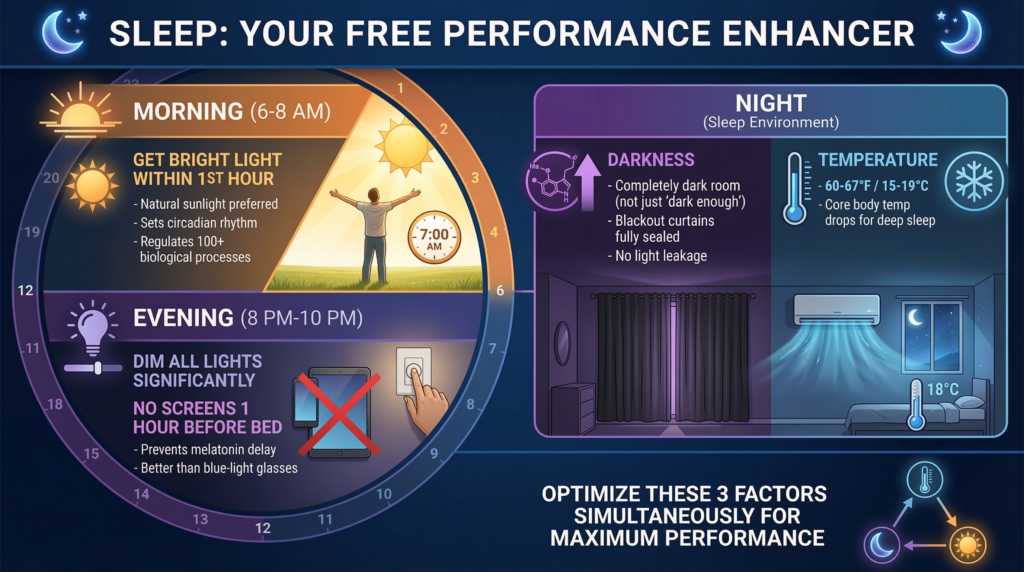
Optimizing sleep needs to address many factors simultaneously. Your bedroom needs to be genuinely dark, not just “dark enough” with light leaking around curtains.
Even small amounts of light exposure during sleep suppress melatonin production and disrupt sleep architecture.
Temperature matters enormously. Your core body temperature needs to drop for deep sleep, which is why sleeping in a cool room dramatically improves sleep quality.
The timing of light exposure also plays a massive role that most people completely ignore. Getting bright light exposure within the first hour of waking, ideally natural sunlight, sets your circadian rhythm and improves both sleep quality and daytime alertness.
This is a fundamental signal that regulates hundreds of biological processes throughout the day.
On the opposite end, blue light exposure in the evening delays melatonin production and pushes your sleep phase later. The solution is dimming all lights significantly in the evening and eliminating screen exposure for the last hour before bed. This works better than blue-light blocking glasses, which have mixed evidence anyway.
Nutrition Moving Beyond Macros
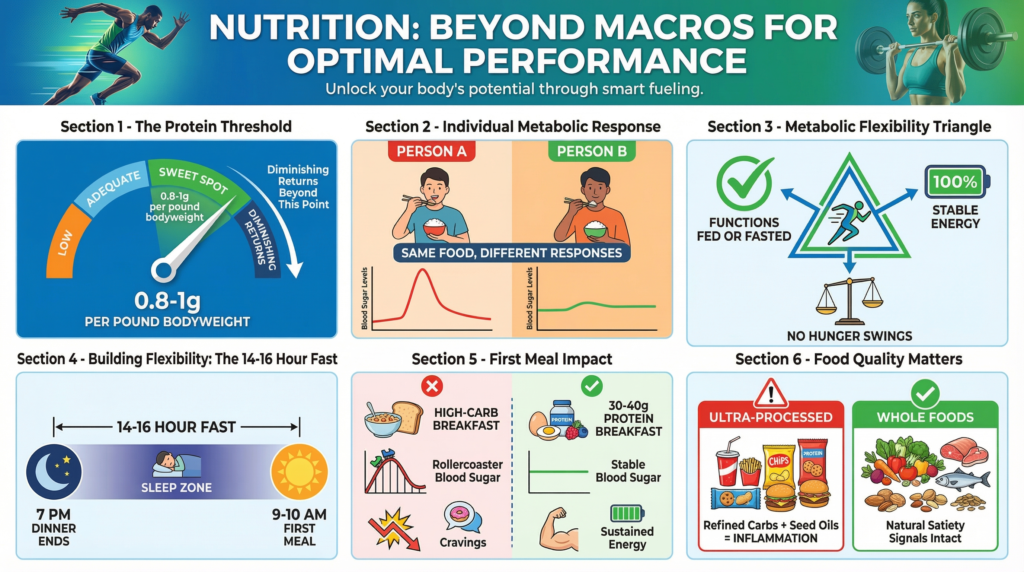
The performance nutrition conversation has been dominated by macronutrient ratios for decades, but that’s actually not where the most interesting optimization happens. Don’t get me wrong, getting adequate protein matters immensely for body composition and recovery.
But once you’re hitting around 0.8 to 1 gram per pound of body weight, obsessing over whether you’re at 150 or 160 grams provides diminishing returns.
What matters more is nutrient timing, food quality, and personal metabolic response. The continuous glucose watch revolution has revealed something fascinating: people have wildly different glycemic responses to identical foods.
One person might spike blood sugar dramatically from eating rice, while another shows minimal response.
This explains why generic dietary advice produces such inconsistent results.
Metabolic flexibility, your body’s ability to efficiently switch between burning carbohydrates and fat for fuel, is one of the most important markers of metabolic health. People with good metabolic flexibility maintain stable energy throughout the day, don’t experience dramatic hunger swings, and can function well whether they’ve recently eaten or not.
Building metabolic flexibility needs deliberate practice. Extended periods between meals, what we call intermittent fasting, train your body to efficiently access stored fat for energy.
This doesn’t need extreme fasting protocols.
Simply extending your overnight fast to 14-16 hours provides significant benefits. For most people, this looks like finishing dinner by 7 PM and not eating breakfast until 9 or 10 AM.
The composition of your first meal dramatically impacts your metabolic trajectory for the entire day. Starting with a high-carbohydrate, low-protein breakfast creates a blood sugar spike followed by a crash, which triggers cravings and energy fluctuations throughout the day.
Beginning with 30-40 grams of protein stabilizes blood sugar, preserves muscle mass, and sets up better metabolic patterns.
Food quality matters more than most people realize. Ultra-processed foods are engineered for palatability in ways that override natural satiety signals.
They typically mix high amounts of refined carbohydrates and seed oils in ratios that don’t exist in nature.
Your body doesn’t have evolved mechanisms for processing these combinations, which leads to inflammation, metabolic dysregulation, and overconsumption.
Strategic Supplementation Beyond the Basics
Once you’ve established proper sleep, nutrition, and movement patterns, supplementation can provide meaningful extra optimization. But supplements cannot compensate for terrible foundational habits.
The supplement industry has created a really problematic dynamic where people believe they need dozens of different compounds. The reality is that a few targeted supplements provide the majority of benefits, while extensive stacking often creates more problems than it solves.
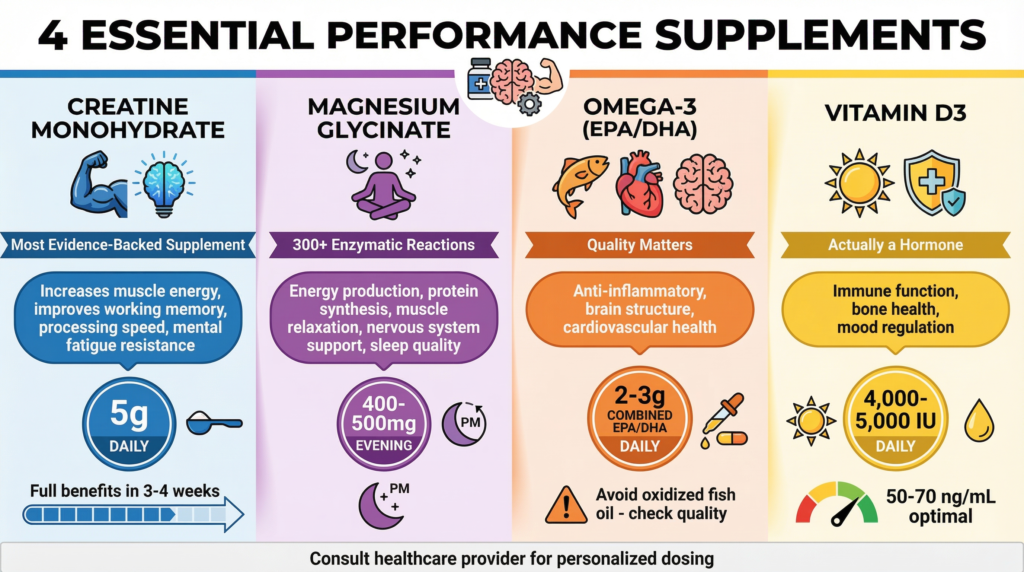
Creatine monohydrate has the most robust evidence base of any performance supplement. It increases phosphocreatine stores in muscles, which provides rapid energy for high-intensity activity.
But it also has significant cognitive benefits that most people don’t realize.
Creatine supplementation improves working memory, processing speed, and mental fatigue resistance, particularly during sleep deprivation or cognitive stress.
The dosing protocol for creatine has been unnecessarily complicated by the supplement industry. Loading phases and cycling are completely unnecessary.
Taking 5 grams daily provides full benefits within 3-4 weeks.
The slight water retention some people experience is intracellular, meaning the water is inside muscle cells, not under your skin, causing puffiness.
Magnesium deficiency is widespread, particularly among people under chronic stress or who exercise regularly. Magnesium is involved in over 300 enzymatic reactions, including energy production, protein synthesis, muscle relaxation, and nervous system regulation.
Most people benefit from supplementing 400-500 mg of magnesium glycinate in the evening, which also supports sleep quality.
Omega-3 fatty acids from fish oil provide anti-inflammatory benefits and support brain structure and function. But dosing matters significantly.
The research showing cardiovascular and cognitive benefits typically uses 2-3 grams of combined EPA and DHA daily.
Many fish oil supplements contain far less, requiring many capsules to reach effective doses. Quality also varies dramatically.
Oxidized fish oil can actually be pro-inflammatory.
Vitamin D3 is less a vitamin and more a hormone that regulates immune function, bone health, mood, and many other processes. Most people are deficient or suboptimal, particularly those living in northern latitudes or spending limited time outdoors.
Optimal levels for performance typically fall between 50-70 ng/mL, which usually needs supplementation of 4,000-5,000 IU daily, though personal needs vary.
The Tracking Trap and What Actually Matters
Wearable technology has created both opportunities and problems for performance optimization. On one hand, devices that track heart rate variability, sleep stages, and activity levels provide useful goal data.
On the other hand, excessive tracking can create anxiety that paradoxically worsens the metrics you’re trying to improve.
Heart rate variability has emerged as one of the most useful biomarkers for overall system stress and recovery status. HRV measures the variation in time between heartbeats.
Higher variability generally indicates better autonomic nervous system function, recovery, and stress resilience.
Consistently low or declining HRV suggests accumulated stress from training, work, inadequate sleep, or other sources.
The key with HRV is looking at trends as opposed to a person’s daily readings. A single low reading doesn’t mean much.
It could result from late eating, alcohol, sleep disruption, or many other factors.
But a week of declining HRV suggests you need to prioritize recovery more aggressively.
Sleep tracking can provide valuable insights, but the accuracy varies significantly between devices. Most consumer wearables do a decent job of estimating total sleep time and wake periods, but are less accurate for specific sleep stages.
The most useful metrics are typically total sleep time, sleep efficiency (percentage of time in bed actually sleeping), and consistency of sleep schedule.
The problematic side of tracking emerges when people become obsessed with optimizing scores as opposed to focusing on how they actually feel and perform. I’ve seen people create significant stress and anxiety by checking their sleep score first thing every morning, which then affects their entire day.
The device is supposed to provide useful information for optimization, not become a source of stress itself.
Advanced Protocols Through Hormesis
Some of the most powerful biohacking protocols work through hormesis, the principle that mild stress stimulates adaptive responses that make you stronger. This applies to cold exposure, heat exposure, exercise, and fasting.
Cold exposure through cold showers, ice baths, or cold plunges creates acute stress that triggers many adaptive responses. Regular cold exposure increases norepinephrine, which improves focus and mood.
It activates brown adipose tissue, which burns energy to generate heat and improves metabolic health.
It reduces inflammation and speeds up recovery from training.
The protocol matters significantly for cold exposure. Brief exposures (2-3 minutes) provide most benefits without excessive stress.
The water should be genuinely cold, around 50-59°F (10-15°C), not just cool.
And consistency matters more than duration. Three-minute cold showers daily provide more benefits than occasional ice baths.
Heat exposure through sauna use has compelling research, particularly from Scandinavian studies. Regular sauna bathing (4-7 times per week for 15-20 minutes at 170-190°F) is associated with reduced cardiovascular mortality, better cognitive health, and improved longevity markers.
The heat stress increases heat shock proteins, which help maintain cellular health and function.
The combination of heat and cold, contrast therapy, can be particularly effective for recovery. The alternating vasodilation and vasoconstriction acts like a pump for the circulatory system, helping clear metabolic waste products and reduce inflammation.
Building Your Personalized Protocol
The most common mistake in biohacking is trying to implement everything simultaneously. This creates several problems.
First, it’s overwhelming and unsustainable.
Second, you can’t tell which interventions actually work. Third, some protocols interact or conflict with each other.
A better approach applies changes sequentially, allowing you to measure impact before adding extra interventions. Start with comprehensive baseline testing to understand your current state.
Then prioritize based on what will provide the largest returns.
For most people, optimizing sleep provides the biggest initial impact. This means establishing a consistent sleep schedule, making your bedroom genuinely dark and cool, getting morning light exposure, and reducing evening blue light.
Give this four weeks before adding extra protocols.
Next, address nutrition fundamentals. This means adequate protein (0.8-1g per pound of body weight), eliminating ultra-processed foods, establishing consistent meal timing, and potentially implementing a daily eating window of 10-12 hours.
Again, give this several weeks to establish as a consistent habit.
Once sleep and nutrition are solid, add strategic supplementation based on your specific deficiencies and goals. For most people, this means vitamin D3, magnesium, omega-3s, and potentially creatine.
Take these consistently for at least 8-12 weeks before evaluating effectiveness.
Only after establishing these foundations should you add advanced protocols like cold exposure, heat therapy, or specialized supplementation. And you should still add these one at a time, giving each 4-6 weeks before adding another variable.
Throughout this process, track relevant metrics. This might include regular DEXA scans for body composition, quarterly blood work, daily HRV and sleep data, and subjective measures of energy, focus, and performance.
The data tells you whether protocols are actually working or just creating extra work and expense.
Frequently Asked Questions
How accurate are continuous glucose monitors for non-diabetics?
Continuous glucose monitors are highly accurate for tracking glucose trends and patterns, though they may show slight variations compared to blood tests. For non-diabetics, the value comes from understanding personal food responses as opposed to precise numerical accuracy.
The patterns reveal which foods cause problematic spikes and how factors like meal timing, exercise, and stress affect blood sugar throughout the day.
Does heart rate variability really forecast overtraining?
Heart rate variability serves as a useful indicator of accumulated stress and recovery status, but you need to look at trends over several days as opposed to single readings. A week of declining HRV suggests your body needs more recovery, whether from training, work stress, or inadequate sleep.
It’s one data point among many, not a definitive predictor by itself.
Is intermittent fasting safe for women?
Intermittent fasting can work well for some women, but needs a more moderate approach than men typically use. Women are more sensitive to caloric restriction due to hormonal differences.
Starting with a 12-14 hour overnight fast is generally safer than jumping to extended fasting windows.
Women should watch menstrual cycle regularity, energy levels, and mood as indicators of whether fasting protocols are suitable for them.
What’s the least effective dose for cold exposure?
Research suggests that 2-3 minutes in genuinely cold water (50-59°F) provides most of the benefits without excessive stress. The key is consistency as opposed to duration.
Daily cold showers are more effective than occasional longer ice baths.
You want to create a mild stress response that triggers adaptation, not put yourself into dangerous hypothermia.
Can supplements replace poor sleep for performance?
No supplement can fully compensate for inadequate sleep. Sleep is when your brain clears metabolic waste, consolidates memory, and your body releases growth hormone for tissue repair.
While certain supplements like caffeine can temporarily mask fatigue, they don’t address the underlying cognitive impairment, metabolic dysfunction, and hormonal disruption caused by sleep deprivation.
How long before seeing results from magnesium supplementation?
Most people notice improvements in sleep quality and muscle relaxation within 1-2 weeks of consistent magnesium supplementation. However, fully replenishing depleted stores can take several months.
The benefits accumulate over time, so consistency matters more than looking for immediate dramatic changes.
What blood markers matter most for performance optimization?
The most useful markers include inflammatory markers (high-sensitivity CRP), metabolic markers (fasting insulin, hemoglobin A1C), hormone levels (testosterone, cortisol, thyroid panel), and lipid particle numbers. These reveal underlying metabolic health, hormonal function, and inflammation levels that directly impact daily performance and long-term health.
Key Takeaways
The most effective biohacking prioritizes fundamentals over advanced protocols. Perfect sleep, nutrition, and stress management provide far greater returns than exotic supplements or cutting-edge devices.
Start with comprehensive baseline testing to understand your personal biology as opposed to following generic protocols.
Implement changes sequentially and measure results so you actually know what’s working. Metabolic flexibility and glucose optimization affect both immediate performance and long-term health.
Recovery deserves equal attention to training and work output.
Individual variability means optimal protocols differ significantly between people.