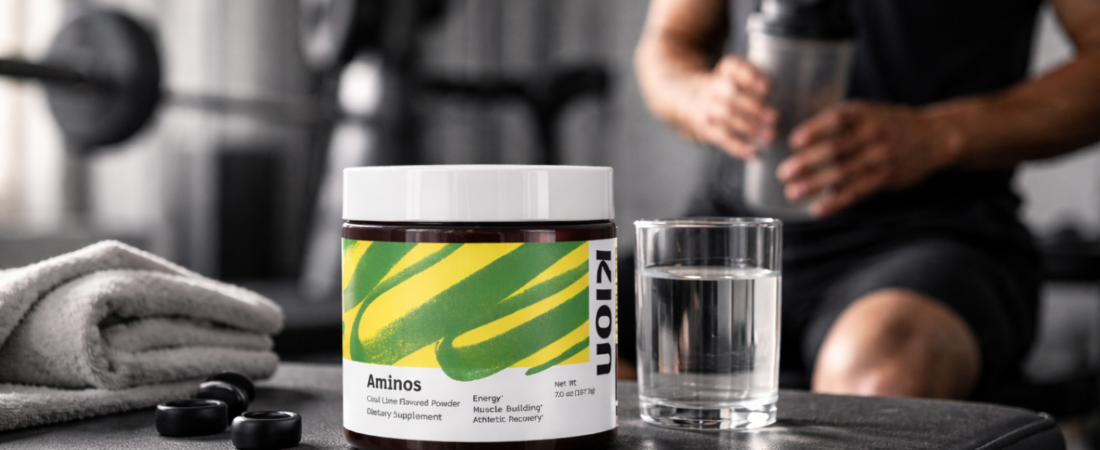
I’ve been seeing Kion supplements pop up everywhere lately, mostly because Ben Greenfield (that Ironman guy) co-founded it back in 2017 with Angelo Keely. The whole pitch is pretty straightforward… They wanted supplements that didn’t contain unnecessary filler ingredients.
This Kion review will break down what they actually sell, what people say about using their products, and whether the premium pricing makes sense for someone trying to improve their health without wasting time or money.
The brand operates out of Boulder, Colorado, and focuses on what they call “science-backed” supplements. Their main product, which everyone talks about, is their amino acid powder; they also produce protein powders and other nutritional support products.
One thing worth mentioning upfront… They have Informed Sport Certification for their protein powder, which means each batch gets tested for banned substances. Their protein comes from grass-fed cows in New Zealand (where dairy regulations are supposedly stricter).
All their products are manufactured in USA facilities with cGMP and NSF-certification standards.
They offer a 60-day money-back guarantee, and you can get 10% off if you do a subscription. Pretty standard stuff, to be honest.
You might also like to read:
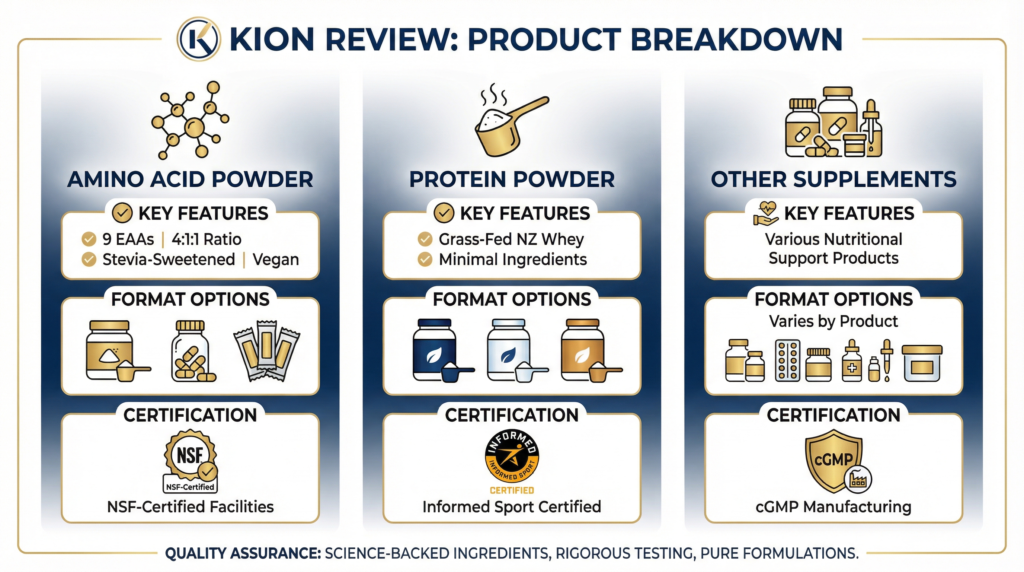
Table of Contents
What Kion Actually Sells
The product lineup isn’t massive, which, honestly, I kind of appreciate because too many options create decision fatigue.
Their flagship product is the Amino Acid Powder. It’s got all 9 essential amino acids (EAAs) in a 4:1:1 ratio that’s supposed to be optimized for muscle building and recovery.
Essential amino acids are the ones your body can’t make on its own, so you need to get them from food or supplements.
The powder comes in four flavors (Cool Lime, Mango, Mixed Berry, and Watermelon), plus they sell it in capsules and personal packets. The flavoring uses stevia and natural flavors, no artificial sweeteners, colors, or any of that stuff.
One scoop has the full EAA profile plus branched-chain amino acids (BCAAs). People use it pre-workout, during workouts, and for recovery after training.
From what I’ve read, it mixes pretty well with cold water and has a tropical flavor without that weird artificial aftertaste some supplements have. It’s vegan and sugar-free, so it won’t spike your blood sugar.
They also make protein powders using grass-fed whey from New Zealand. Same deal with the clean ingredient list… usually five ingredients or less, no artificial anything.
Quick Product Breakdown
| Product | Key Features | Format Options | Certifications |
| Amino Acid Powder | 9 EAAs, 4:1:1 ratio, stevia-sweetened, vegan | Powder, capsules, packets | NSF-certified facilities |
| Protein Powder | Grass-fed NZ whey, minimal ingredients | Powder (various flavors) | Informed Sport certified |
| Other Supplements | Various nutritional support products | Varies by product | cGMP manufacturing |
Does This Stuff Actually Work
So here’s where it gets tricky… There are user reports all over the place about faster recovery times and less soreness when using the amino acids around workouts. Some people mention less afternoon fatigue and better energy levels, especially when they take it in the morning without breaking their fast.
Long-distance travelers say they use it as a hydrating boost during flights and long trips.
But (and this is important) these are just testimonials from random people, not controlled clinical studies. The amino acid category itself has plenty of research showing that EAA supplementation helps with muscle protein synthesis and recovery… but that’s about amino acids in general, not specifically Kion’s formulation.
The 4:1:1 BCAA ratio they use is pretty common across premium amino products. This ratio prioritizes leucine, which is the amino acid that supposedly activates muscle protein synthesis pathways.
So does it work? Probably yes for the basic function of providing amino acids to your muscles.
But whether Kion specifically works better than other quality EAA supplements is harder to say definitively.
The Ingredient Situation (Here’s Where It Gets Interesting)
This is the part that creates some debate among people who really care about supplement transparency.
The good news is that the powder contains clean, recognizable ingredients: amino acids, stevia, and natural flavors. No artificial sweeteners, binders, or questionable fillers show up on the visible ingredient lists.
The company markets this heavily as their main selling point.
The not-so-good news is that the complete ingredient profile sits within a proprietary “NutriAminos complex.” That means you don’t actually see the exact dosages of each amino acid. The label doesn’t show you the complete inactive ingredients list either.
For some people, this is fine because they trust the brand. For others (especially people who like to quantify everything they’re putting in their body), this feels like a step backward in transparency.
You’re basically relying on Kion’s quality standards without being able to independently verify what’s in there and in what exact amounts.
If you want truly clean supplements with full transparency, you might need to look elsewhere. But if you’re okay with trusting a brand that has decent certifications and a good reputation, then it’s probably fine.
Pros and Cons Breakdown
What Works Well
The ingredient list is actually clean. No artificial sweeteners, colors, or flavors. This matters if you’ve had digestive issues or weird reactions to other supplements that load up on artificial stuff to make them taste better.
Multiple formats for different situations. Powder is cheapest per serving and works great at home. Capsules are convenient for taking to work.
Packets are perfect for travel.
This flexibility actually solves real problems for people with busy schedules who move around a lot.
Real certifications that mean something. Informed Sport testing and NSF certification involve third-party verification, not just the company making claims about itself.
Pricing sits in the middle range. The subscription price averages around $0.64 per serving for amino acids, which is mid-range for genuine EAA products from established brands. Not the cheapest, but not the most expensive either.
Actual money-back guarantee. 60 days gives you real time to test whether the product affects your recovery and energy. That removes some of the financial risk of trying something new.
What Doesn’t Work So Well
Proprietary blending hides specifics. You can’t verify the exact BCAA ratio, leucine content, or individual amino acid amounts. For people who like to track everything precisely, this is annoying.
Marketing sometimes blurs the line. The way Kion markets its products occasionally conflates EAAs with protein powders in ways that could confuse people about what they’re actually getting and what benefits to expect.
Higher price without full transparency to justify it. The premium cost versus budget brands becomes harder to justify when you can’t independently verify ingredient ratios or purity beyond what the company tells you.
Taste is hit or miss. Some people think the stevia-sweetened formulation tastes fine, others say it’s too sweet or has an artificial taste, especially in certain flavors. This seems to vary by person.
What Using Kion Is Actually Like
From reading through user experiences, people say the amino powder mixes easily into cold water without clumping up. The on-the-go packets solve the travel problem, which honestly is a bigger deal than it might sound if you travel often for work.
The most common usage pattern is mixing a scoop before workouts and sipping it during training. Other people use it during morning fasts because the amino acids signal to your muscles that they don’t need to break down lean tissue for amino acids, but it technically doesn’t break the fast with calories.
The recovery experience seems pretty consistent across different reports… soreness feels more manageable, and that afternoon crash after hard training doesn’t hit as hard. Whether this represents actual measurable physiological change or placebo effect can’t really be determined from user testimonials alone.
The convenience factor probably matters as much as the supplement itself for busy professionals. Products that need complex prep or many servings throughout the day just create friction that makes you less likely to actually use them consistently.
If you’re looking for clean amino acids without a bunch of filler ingredients → [Check current Kion pricing and flavors here]
Is It Worth the Money
Kion positions itself in the premium tier. You’re paying more than budget brands like Optimum Nutrition but less than ultra-premium brands targeting elite athletes.
The question becomes what you’re actually getting for that extra cost.
The clean formulation argument makes sense if artificial sweeteners bother you or if you’ve had digestive problems from cheaper products with questionable additives. This isn’t a trivial concern if gut sensitivity limits your supplement options.
The certification advantage matters less if you don’t compete in tested sports, though NSF certification still indicates manufacturing standards above the industry’s minimum requirements.
The convenience formats justify the premium only if you’ll actually use them. Bulk powder offers better cost-per-serving, but packets cost more.
That premium only makes sense if it prevents you from skipping doses while traveling.
The money-back guarantee reduces financial risk compared to buying supplements that don’t work for you, with no way to get your money back.
For people with decent disposable income and demanding schedules, the premium pricing often aligns with how they already spend money. They’re willing to pay for convenience and verification over the absolute lowest cost.
Who Should Actually Consider This
People who travel often for work and want genuine amino acids without artificial ingredients will find real value here. The packet format solves a problem that budget brands don’t address.
If you’re already experienced with supplements and understand what EAAs do for recovery, you can probably work around the proprietary blend limitation by monitoring your own performance and recovery metrics.
Those with established supplement routines can swap their current aminos for Kion without massive disruption if cost isn’t a limiting factor.
People with documented sweetener sensitivities benefit from the clean formulation and stevia-only approach.
Who Should Probably Look Elsewhere
If you’re focused purely on getting the most leucine per dollar, you’ll find better value in transparent products that publish full amino acid breakdowns.
People who need pharmaceutical-grade verification throughout the entire supply chain should recognize that Kion’s proprietary blend prevents this level of transparency.
Those on tight budgets can access functional EAA products at $0.40 per serving from competitors. That difference adds up significantly over months of consistent use.
Athletes in tested sports might want brands with higher-profile third-party testing visibility, though Informed Sport certification does carry some weight.
Final Thoughts on This Kion Review
Kion delivers on the basic promise of clean ingredients, convenient formats, and actual amino acids for recovery and muscle support. The brand avoids the worst supplement industry practices like proprietary blends masking cheap fillers, artificial sweetener overload, and misleading marketing about clinical evidence that doesn’t exist.
That said, the premium pricing means either accepting proprietary formulations or placing significant value on convenience and brand reputation. The company built legitimate credibility through Ben Greenfield’s athletic reputation and transparent communication about manufacturing standards.
For busy professionals with disposable income who value their time and prefer cleaner ingredients, Kion occupies a reasonable position in the market. The products work as described, the guarantees are real, and the brand actively avoids the most problematic industry practices.
Want to test Kion for yourself without much risk? Start with their amino acid powder in whichever flavor sounds good and use the 60-day money-back guarantee if it doesn’t work for you. [See current options here]
The real question isn’t whether Kion works (it probably does what amino acids are supposed to do). The question is whether the premium aligns with your priorities around convenience, ingredient quality, and travel flexibility.
If you’re optimizing for recovery, trying to maintain muscle during high-stress work periods, or just refusing to compromise on supplement quality, Kion delivers a functional product without the usual garbage additives.
The proprietary blend thing will bother some people and not bother others. If you need to know exact amounts of every ingredient, this probably isn’t for you.
If you’re okay trusting a brand with decent certifications and a solid reputation, then it’s worth considering.
Ready to give it a shot? The 60-day guarantee means you can actually test whether it affects your recovery and energy without being stuck with something that doesn’t work. [Check current Kion deals and subscription options]
At the end of the day, supplements are highly personal. What works great for someone else might do nothing for you, and vice versa.
The money-back guarantee at least removes some of the financial risk of finding out whether Kion fits your specific needs.