You know that weird feeling when you’ve chugged water all day but still feel kind of… off?
Like your brain is foggy, you’re dragging by 2 PM, and you can’t figure out why because you literally have a water bottle glued to your hand.
That was my signal that something was missing. It turns out that sometimes the issue isn’t drinking enough water.
It’s that you’re flushing out electrolytes faster than you’re replacing them, and plain water doesn’t fix that.
LMNT showed up everywhere in my feed, podcasts, Instagram, and fitness forums. The pitch seemed straightforward: high sodium, zero sugar, no junk.
Just electrolytes for people who sweat or move around a lot.
So here’s what I found after looking into whether it actually works, who it’s designed for, and whether the cost makes sense for everyday biohacking and performance optimization for busy adults who don’t have time for complicated routines.
What LMNT Actually Contains
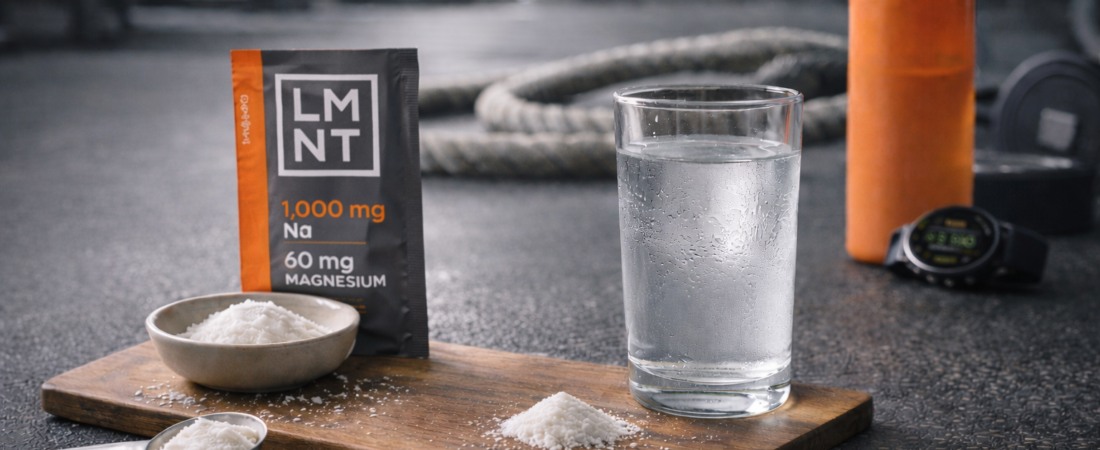
LMNT comes in stick packets. You rip one open, dump it in water, shake it up, and drink it.
Each packet has three electrolytes:
- Sodium: 1,000mg
- Potassium: 200mg
- Magnesium: 60mg
The sodium amount is what stands out. That’s 43% of your daily recommended intake in one drink.
For context, most sports drinks give you maybe 200-300mg of sodium per serving.
LMNT gives you five times that.
The formula has no sugar, no artificial sweeteners except stevia, and no fillers. The ingredient list is short.
You get electrolytes, natural flavoring, and that’s basically it.
They make it in GMP-certified facilities and run third-party testing for contaminants. The company is pretty transparent about what’s inside and what’s not.
Flavors include citrus salt, raspberry salt, orange salt, watermelon salt, chocolate salt (yes, really), and a few others. There’s also an unflavored version if you just want salty water without any taste masking.
How It Stacks Up Against Other Electrolyte Drinks
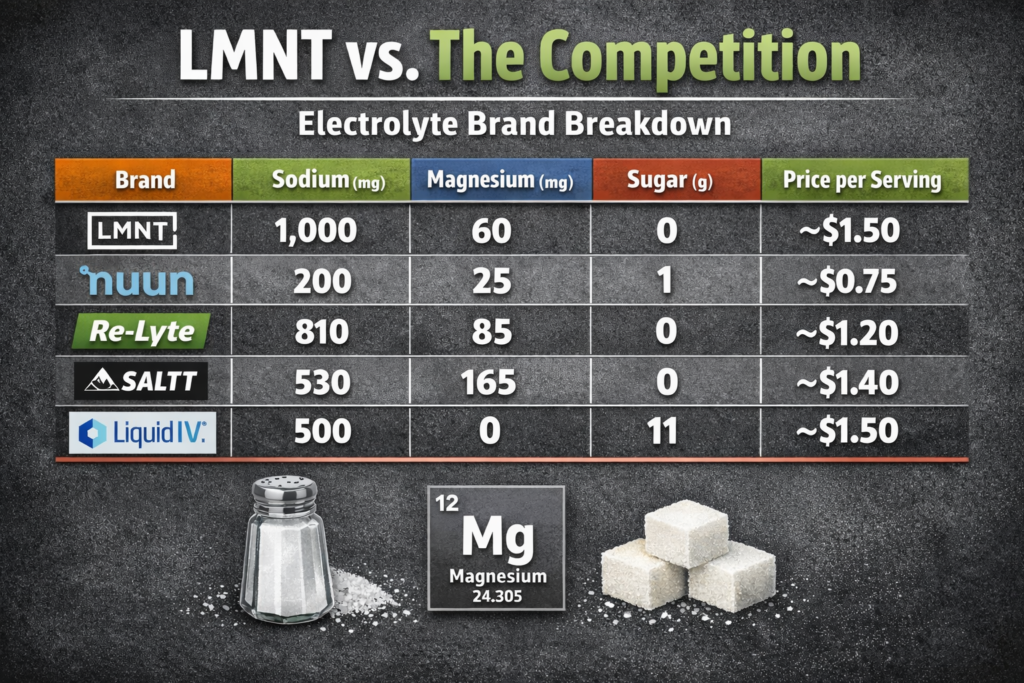
LMNT isn’t the only option out there, so it helps to know what makes it different.
Nuun costs less, around 75 cents per tablet. But it only delivers 200mg of sodium compared to LMNT’s 1,000mg. Nuun also uses magnesium oxide, which your body doesn’t absorb as well as other forms of magnesium.
If you need serious electrolyte replacement and you’re sweating heavily, Nuun probably won’t cut it.
If you just want a slightly enhanced water and you’re on a budget, it works fine.
Re-Lyte has more total electrolytes per serving and uses magnesium malate instead of citrate. Some people digest it better.
Re-Lyte also has a more balanced sodium-to-potassium ratio (2:1 vs. LMNT’s 5:1).
The downside is fewer flavor options and mixed reviews on taste consistency.
SALTT contains almost three times the magnesium of LMNT, which matters if you’re dealing with muscle cramps or sleep issues. It also tastes less aggressively salty.
But SALTT has way fewer flavors available, and it’s harder to find in stock sometimes.
Liquid IV includes 11 grams of sugar per serving and added vitamins like B and C. If you’re doing long endurance workouts and you want carbs for energy, Liquid IV makes sense.
If you’re trying to avoid sugar completely, whether you’re doing keto, fasting, or just don’t want the extra calories, LMNT is the better pick.
The pattern here is pretty clear. LMNT prioritizes high sodium and keeps everything else minimal.
It’s built for a specific use case, not for being the “best” electrolyte drink for everyone.
What LMNT Is Supposed to Do
The marketing claims are straightforward: better hydration, improved muscle function, clearer thinking, faster recovery.
Here’s what actually holds up.
Hydration and mineral balance: When you sweat, you lose water and minerals. Drinking plain water replaces the water but not the minerals.
Sodium helps your body actually keep that water instead of just peeing it out an hour later.
This is basic physiology, not hype. If you’re losing a lot of salt through sweat, you need to replace it.
LMNT does that.
Muscle function: Potassium and magnesium both play roles in muscle contraction and relaxation. Low magnesium can contribute to cramping.
But LMNT only has 60mg of magnesium, which is pretty low compared to competitors.
If muscle recovery is your main goal, you might need to supplement magnesium separately or pick something like SALTT instead.
Mental clarity: Electrolyte balance does affect nerve signaling and brain function. If you’re chronically dehydrated or low on sodium, fixing that will probably make you feel sharper.
If you’re already well-hydrated and getting enough salt from food, you might not notice much difference.
The honest take is that LMNT does what it’s designed to do: replace electrolytes you lose through sweat or activity. It’s not magic, and it won’t turn you into a superhuman.
But if you’re active, live somewhere hot, or have a demanding schedule that involves physical work, it fills a real gap.
Who LMNT Works For (and Who Should Skip It)
LMNT makes sense for specific situations.
You’re probably a good fit if:
You exercise regularly and sweat a lot. You’re doing keto, paleo, or intermittent fasting and want zero carbs or sugar.
You live in a hot climate or just naturally sweat heavily.
You drink tons of water but still feel dehydrated or foggy. You want a simple hydration routine that doesn’t need research or planning.
You should probably skip it if:
You have high blood pressure or a condition that needs low sodium intake. You’re mostly sedentary and don’t lose much sweat.
Your diet already includes a lot of processed food, takeout, or restaurant meals (those are loaded with sodium already).
You’re sensitive to stevia; some people report digestive issues with it.
The sodium content is the real filter. If you’re already getting 3,000-4,000mg of sodium daily from food, adding 1,000mg from LMNT could push you too high.
If you’re active and eating mostly whole foods, you probably have room for it.
| Electrolyte Brand | Sodium (mg) | Magnesium (mg) | Sugar (g) | Price per Serving |
| LMNT | 1,000 | 60 | 0 | ~$1.50 |
| Nuun | 200 | 25 | 1 | ~$0.75 |
| Re-Lyte | 810 | 85 | 0 | ~$1.20 |
| SALTT | 530 | 165 | 0 | ~$1.40 |
| Liquid IV | 500 | 0 | 11 | ~$1.50 |
Using LMNT in Real Life
How LMNT fits into your actual routine matters more than what’s on the label.
Mixing and taste: The powder dissolves fast. No clumping, no weird residue.
But the taste is salty.
Really salty. If you’re used to sweet sports drinks, this will catch you off guard.
Some people use half a packet in 32-40 ounces of water to tone it down. Others mix many packets into a gallon jug and sip throughout the day.
Both approaches work fine.
The flavored versions help mask the salt a bit. Citrus salt, mango chili, and chocolate salt are popular.
The chocolate one is polarizing; some people love it, others think it tastes like hot cocoa mixed with seawater.
The unflavored version is just straight salty water, which is fine if you’re mixing it into something else or you don’t mind the taste.
When to drink it: One packet works well on workout days or when you’re spending time outside in the heat. For everyday use without intense activity, half a packet is usually enough.
Some people drink it first thing in the morning to kickstart hydration, especially if they’re fasting or skipping breakfast.
Cost: At around $1.50 per serving when you buy in bulk, it’s not cheap. A 30-packet box runs about $45, depending on where you buy it.
That’s more than plain water but less than a lot of specialty supplements or daily coffee shop runs.
The convenience is the real value. You can throw a few packets in your gym bag, car, or desk drawer and mix them whenever you need them.
No refrigeration, no prep, no thinking required. For everyday biohacking and performance optimization for busy adults, simplicity matters a lot.
Breaking Down the Cost and Value
LMNT typically costs $1.30-$1.70 per serving, depending on how you buy it. You can get it cheaper in bulk canisters or if you subscribe.
That’s more expensive than making your own electrolyte mix at home (salt, potassium chloride, magnesium powder) but way more convenient.
Whether it’s worth the money depends on what problem you’re solving. If you’re dealing with chronic dehydration, afternoon crashes, or muscle cramps that impact your training, spending $1.50 to fix that is basically nothing.
If you’re just trying it out because it sounds cool, but you don’t have any real hydration issues, it might not do much for you.
The smart move is to try it for two weeks with a specific goal in mind. If you’re training hard, use it on workout days and track how you feel.
If you’re trying to fix brain fog or fatigue, use it daily and see if anything changes.
Most people can tell within that window whether it’s making a real difference.
If it works, keep using it. If nothing changes, save your money.
Pros and Cons You Should Know
What works:
High sodium content actually matches what you lose when you sweat heavily. Zero sugar and no artificial junk.
Simple formula without randomly added ingredients.
Works with most diets, keto, paleo, fasting, whatever. Portable and stupidly easy to use.
Multiple flavor options so you don’t get bored. Clean manufacturing with third-party testing.
What doesn’t:
The sodium content is too high for some people, especially if you have blood pressure issues. The taste is genuinely salty, even with flavoring.
Lower magnesium compared to brands like SALTT or Re-Lyte.
Uses stevia, which some people don’t tolerate well. The price point adds up if you’re using it daily.
Not suitable if you’re already eating a high-sodium diet.
You need to be careful not to overuse it and blow past your sodium limits.
Final Verdict
LMNT solves a specific problem for a specific type of person. If you’re active, you sweat a lot, and you want a simple way to replace what you’re losing without adding sugar or unnecessary ingredients, it works.
It’s not going to improve your life or fix bad habits. But for people managing demanding schedules while trying to stay sharp and recover properly, it removes a lot of friction.
You mix it, drink it, and move on.
No research, no complex timing, no decision fatigue.
For everyday biohacking and performance optimization for busy adults, LMNT fits because it doesn’t need extra mental bandwidth. You’re not tracking ratios or reading labels every time you need hydration.
You just use it.
If you’re losing significant electrolytes and plain water isn’t cutting it, it’s worth testing. If you’re sedentary or already getting plenty of sodium from food, skip it.
The brand doesn’t make wild claims. It doesn’t promise to fix everything.
It just positions itself as a practical tool for practical needs, which is refreshing.
Where to Start
Get a variety pack here to see if electrolyte balance is really the problem. This lets you sample a few different flavors and determine whether the salt content of LMNT is suitable for you.
If LMNT’s high sodium feels like too much but you like the zero-sugar approach, Re-Lyte offers a similar philosophy with more balanced electrolyte ratios. Worth comparing them side by side if you’re sensitive to salt.
For people on tighter budgets, Nuun is still a solid choice if you don’t need heavy sodium replacement and you’re just looking for lightly enhanced hydration.
If you’re trying to improve performance without spending hours researching supplements, LMNT fits that goal. It handles hydration so you can focus on everything else.
That’s the value, one less thing to think about when your schedule is already packed.
LMNT delivers what it promises. Whether it’s worth your money depends on whether you’re actually losing electrolytes and whether your body can handle the sodium content.
Most people would benefit from just trying it for two weeks with clear expectations as opposed to overthinking whether it’s theoretically better than other options.
For everyday biohacking and performance optimization for busy adults, sometimes the best tool is the one that’s simple enough to actually use consistently. LMNT clears that bar pretty easily.